Research
How long do AI citations last? Evidence from 535 tracked citations
83% of first-time ChatGPT and Gemini citations were not repeated within 14 days. What 535 tracked citations show, and what they cannot.
By Digraph Research · Original analysis of Digraph monitoring data
9 min read
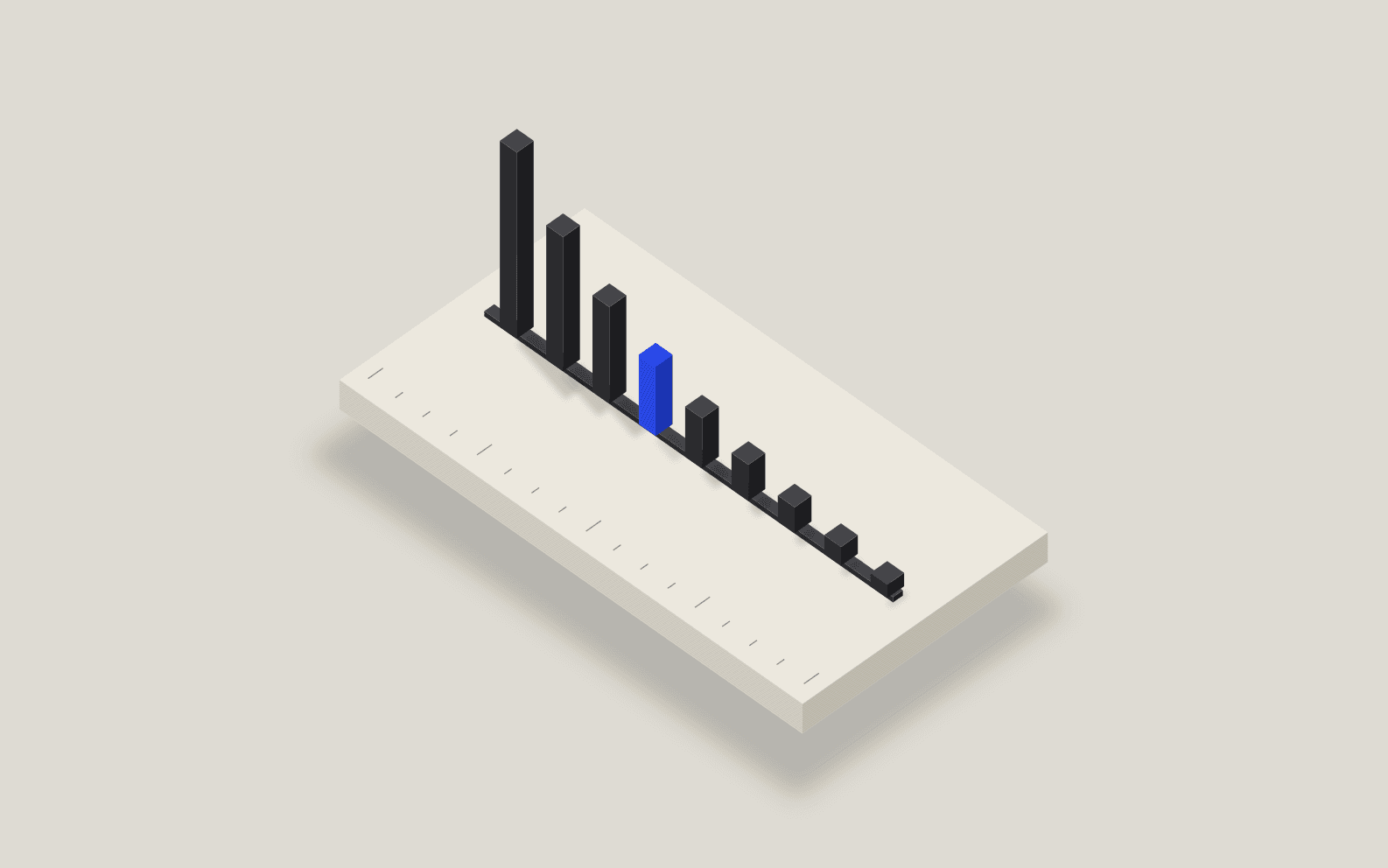
Digraph followed 535 first-time citations in ChatGPT and Gemini. 17% were cited again by the same engine for the same prompts within 14 days. The other 83% were not cited again in that window.
That is a narrower claim than a half-life, and it is deliberate. Our dataset is a small, unevenly sampled slice of real monitoring: 11 trackers, 28 monitoring days between June 7, 2026 and October 7, 2026, and two engines. It is enough to show how citations behave in practice and where measurement goes wrong. It is not enough to rank engines or publish a decay constant, so we do not.
Key findings
- Most citations were one-off. 92 of 535 first-time citations (17%, 95% interval 14–21%) were cited again within 14 days.
- One check understates return rates. In ChatGPT, the re-citation rate was 12% for lifecycles with one follow-up run and 69% for lifecycles with six or more.
- Brand-owned pages came back more often. 43% of brand-owned lifecycles were re-cited, against 12% of third-party lifecycles.
- The ChatGPT–Gemini gap is not an engine ranking. 31% against 8% is confounded by cadence, dates, and prompt sets.
What counts as a citation lifecycle?
A citation lifecycle is one URL cited by one engine for one tracker. A tracker is a configured set of buyer prompts that Digraph runs on a schedule for one brand. The lifecycle starts on the first run where the URL was cited. We then ask a single question: was that URL cited again by the same engine, for the same tracker, in the next 14 days?
Pooled across all trackers, we found 910 lifecycles. We evaluated 535 of them. The other 375 (41%) had no follow-up run on that engine inside the 14 days, so nothing could have been observed. We excluded them instead of counting them as lost. That choice matters, as the next section shows.
How many AI citations are repeated within 14 days?
92 of 535 evaluable lifecycles (17%) were cited again. In ChatGPT it was 66 of 214 (31%); in Gemini it was 26 of 321 (8%). A citation that shows up once is usually not a stable position.
Re-citation rate within 14 days
Bar = share cited again · line = 95% interval
Share of first-time citations cited again within 14 days
Evaluable lifecycles only: the tracker ran at least once in the 14 days after the first citation.
The figure below shows what these records look like. Each row is a real lifecycle. Day 0 is the first citation. Hollow circles are monitoring runs where the URL was not cited, and yellow-green circles are runs where it came back.
28 citation lifecycles, day 0 to day 14
Waiting to start
ChatGPT · cited again (12)
ChatGPT · not cited again (8)
Gemini · not cited again (8)
- First citation (day 0)
- Monitoring run, URL not cited
- Cited again
Why does checking more often change the result?
A naive count would say 676 of 830 URL and engine pairs (81%) were cited on a single run date. Most of that number measures how rarely we looked, not how quickly citations disappeared. Trackers run on different schedules, and a URL cannot be seen again on a day nobody checked.
Splitting ChatGPT lifecycles by the number of follow-up runs shows the effect. With one follow-up run, 9 of 73 were cited again (12%). With six or more, 27 of 39 were (69%). More runs give a URL more chances to reappear, and the trackers with dense schedules also cover different dates, so this is a measurement lesson and not a decay curve. It does mean that a lone check understates how often a source returns.
Re-citation rate by number of follow-up runs
Bar = share cited again · line = 95% interval
ChatGPT
Rate rises as more follow-up runs give a URL more chances to reappear.
Gemini
No Gemini lifecycle with 3–5 follow-up runs was cited again (0 of 39).
Gemini does not follow the same pattern: none of its 39 lifecycles with three to five follow-up runs was cited again. We do not have enough Gemini data to say whether that reflects the engine, the dates it was monitored, or the prompts. Gemini monitoring in this sample ends on August 24, 2026.
Do brand-owned pages stay cited longer than third-party pages?
In this sample, yes. Brand-owned lifecycles were cited again 43% of the time (37 of 86). Third-party lifecycles were cited again 12% of the time (55 of 449). In ChatGPT alone the gap was 51% (35 of 69) against 21% (31 of 145).
Re-citation rate by source type
Bar = share cited again · line = 95% interval
Brand-owned and third-party pages
Brand-owned means the cited domain belongs to the brand the tracker monitors.
By engine
Gemini has only 17 brand-owned lifecycles, so its brand-owned rate is too imprecise to compare.
Two cautions apply. The brand-owned group is small and concentrated: 86 lifecycles from 10 domains. And a brand-owned page may be re-cited because the tracker's prompts are about that brand, which makes the page a natural source each time the prompt runs. The result fits a plausible mechanism, but it is a pattern to test on your own prompts and not a rule.
Why we are not ranking ChatGPT against Gemini
The gap, 31% against 8%, would make an easy headline. We do not think it is supportable, for four reasons:
- Different cadence. Only 39 Gemini lifecycles had three or more follow-up runs, against 101 for ChatGPT.
- Different dates. ChatGPT monitoring runs through October 7; Gemini monitoring in the sample ends on August 24.
- Different mix. Most brand-owned lifecycles, which persist more, are in ChatGPT: 69 against 17 in Gemini.
- Concentration. Two of the 11 trackers account for 47 of the 66 ChatGPT re-citations (71%). A pooled rate hides that.
A fair comparison needs both engines monitored on the same prompts, at the same daily cadence, over the same dates. We are collecting that dataset.
What this means for teams tracking AI citations
- Treat a single citation as an observation. Most first-time citations were not repeated, so one appearance does not justify a content decision. See the guide to reading daily movement.
- Monitor daily before calling a citation lost. A missing citation only means something if the prompt ran. Count unobserved days separately from absent ones.
- Report brand-owned and third-party citations separately. They behaved differently here, and a pooled rate would hide it. The source analysis guide covers which sources shape answers.
- Compare engines only on matched prompts. Use the same prompts, cadence, and dates before drawing an engine conclusion. The measurement guide sets out a repeatable scope.
Digraph runs your prompt set on a schedule, stores every cited URL with its date and engine, and separates owned from third-party sources, so you can see which citations return. Explore AI search visibility software.
Limits of this study
- Small, convenience sample: 11 trackers, 28 monitoring days, and two engines. It is not a census of AI answers.
- Uneven cadence: runs were weekly in June and mostly daily in late August and from late September, so lifecycles are not equally observable.
- Lifecycles within a tracker are not independent, and the intervals treat them as if they were, so they understate the real uncertainty.
- A 14-day window cannot show long-run decay, and we do not estimate a half-life.
- Perplexity is excluded: it has a single monitoring day in the sample.
Methodology
| Parameter | Value |
|---|---|
| Source | Digraph monitoring records, pooled and anonymized |
| Window | June 7, 2026 to October 7, 2026 (28 monitoring days) |
| Engines | ChatGPT and Gemini |
| Unit | One URL, one engine, one tracker |
| Lifecycles found | 910 |
| Evaluable lifecycles | 535 (at least one follow-up run within 14 days) |
| Outcome | Cited again by the same engine for the same tracker on any run in days 1 to 14 |
| Uncertainty | 95% Wilson score intervals, treating lifecycles as independent |
| Privacy | Aggregates only; no customer names, domains, or URLs are published |
Brand-owned status comes from whether the cited domain belongs to the brand a tracker monitors. The lifecycle figure uses a stratified sample, drawn in a fixed hash order, and is for illustration only. We will repeat the analysis with daily monitoring on matched prompts across engines and publish it when every lifecycle has a full 14 days of daily follow-up.
Frequently asked questions
How long does an AI citation last?
In Digraph's sample, 17% of first-time citations (92 of 535) were cited again by the same engine for the same prompt set within 14 days. This is a re-citation rate, not a half-life. How long a citation lasts depends on the engine, the source type, and how often you check.
Is a citation in ChatGPT or Gemini permanent?
The data does not support treating it as permanent. Most first-time citations in the sample were not repeated within 14 days, so a single appearance is an observation and not a stable position.
Do brand-owned pages stay cited longer than third-party pages?
They were cited again more often. 43% of brand-owned lifecycles (37 of 86) were re-cited, against 12% of third-party lifecycles (55 of 449). The brand-owned group covers only 10 domains, so treat this as a pattern to test rather than a rule.
Which engine keeps citations longer, ChatGPT or Gemini?
This study cannot say. ChatGPT lifecycles were re-cited more often (31% against 8%), but the two engines were monitored at different cadences over different date ranges, and the prompt sets differ. We do not rank engines on this data.
How often should teams monitor AI citations?
Often enough that a missing citation can be told apart from an unobserved one. In the ChatGPT data, the re-citation rate was 12% for lifecycles with one follow-up run and 69% for lifecycles with six or more. That pattern is partly mechanical, but it shows a single check understates how often sources return. Daily monitoring for at least two weeks is a practical minimum before calling a citation lost.
What is a citation lifecycle?
In this study, a citation lifecycle is one URL cited by one engine for one tracker. It starts on the first run where the URL was cited. It counts as evaluable if the tracker ran on that engine at least once in the next 14 days.